In the rapidly evolving landscape of digital marketing, the conversation has decisively shifted. No longer are we just discussing AI-powered writing assistants; as of 2026, the strategic advantage belongs to those who deploy autonomous systems capable of achieving topical authority at scale. This is the era of the AI agent, a sophisticated engine that does more than just generate text—it executes a complete content strategy. For businesses seeking to dominate search rankings, understanding and implementing AI agents for SEO and marketing is no longer optional; it’s the core of a modern, competitive digital presence.
Generic, uninspired AI content is flooding the web, leading to diminishing returns and penalties from smarter search algorithms. The solution lies in AI that is not only creative but also deeply integrated, factually grounded, and capable of operating on autopilot. This guide provides a complete overview of how these advanced AI agents work, the technology that powers them, and a strategic framework for transforming your WordPress site into a content powerhouse.
Table of Contents
- What Are AI Agents in SEO and Marketing?
- The Core Technology Driving Modern AI Agents
- Key Capabilities: How AI Agents Revolutionize Your Content Workflow
- Why Native WordPress Integration is a Game-Changer
- How to Choose the Right AI SEO Agent in 2026
- Implementing an AI Agent Strategy: A 5-Step Framework for 2026
- Common Pitfalls When Automating SEO with AI Agents (And How to Avoid Them)
- Measuring the ROI of Your Autonomous Content Strategy
- Case Study: How a B2B Tech Firm Automated Topical Authority
- The Future is Autonomous: What’s Next for AI in Digital Marketing?
- Frequently Asked Questions (FAQ)
What Are AI Agents in SEO and Marketing?
AI agents for SEO and marketing are all-in-one content engines designed to automate the entire content lifecycle, from ideation and generation to publishing and strategy management, directly within your content management system. Unlike simple AI writers that require constant manual input, these agents operate with a high degree of autonomy, leveraging your unique business data to drive rankings on autopilot.
Defining the AI Agent: Beyond a Simple Content Writer
An AI writer is a tool; an AI agent is a system. A writer takes a prompt and returns text. An agent, on the other hand, is an integrated solution that understands your strategic goals. It connects to your existing data, follows a predefined schedule, and executes complex tasks without continuous oversight. It’s the difference between hiring a freelance writer for one article versus having an entire content department working 24/7 to execute your strategic vision and build comprehensive topical authority across your niche.
Key Differentiators: Autonomy, Integration, and Strategy
Three core pillars separate a true AI agent from other tools:
- Autonomy: Modern agents use scheduling systems like WP-Cron to autonomously generate and publish content daily, weekly, or monthly. You define the strategy once, and the agent executes it indefinitely, creating a consistent stream of high-quality content.
- Integration: They are not external tools. They are built directly into your platform, like WordPress, using standard APIs and hooks for seamless, secure, and efficient operation. This eliminates workflow friction and enhances security.
- Strategy: The most advanced agents use your specific business data—existing pages, product descriptions, PDFs, and even images—to ensure every piece of content is factually grounded, on-brand, and authoritative. This is the key to creating content that search engines trust.
Why 2026 is the Year of the Autonomous SEO Agent
The convergence of multi-modal LLMs, mature integration frameworks, and the market’s demand for authentic, high-authority content has made 2026 a tipping point. Search engines are increasingly prioritizing content that demonstrates deep expertise and is factually verifiable. Generic AI content fails this test, while content produced by data-grounded AI agents excels, creating a significant competitive moat for early adopters.
The Core Technology Driving Modern AI Agents
The remarkable capabilities of today’s AI agents are built upon sophisticated technologies designed to overcome the limitations of earlier AI models. Understanding these core components is key to appreciating their strategic value for SEO and marketing.
Key Takeaways:
- RAG (Retrieval-Augmented Generation): Grounds AI in your specific business data for unparalleled factual accuracy and brand alignment.
- Multi-Model AI: Provides the flexibility to choose the best LLM (GPT, Gemini, Grok) for a specific marketing task, from creative writing to deep analysis.
Retrieval-Augmented Generation (RAG): Grounding AI in Your Reality
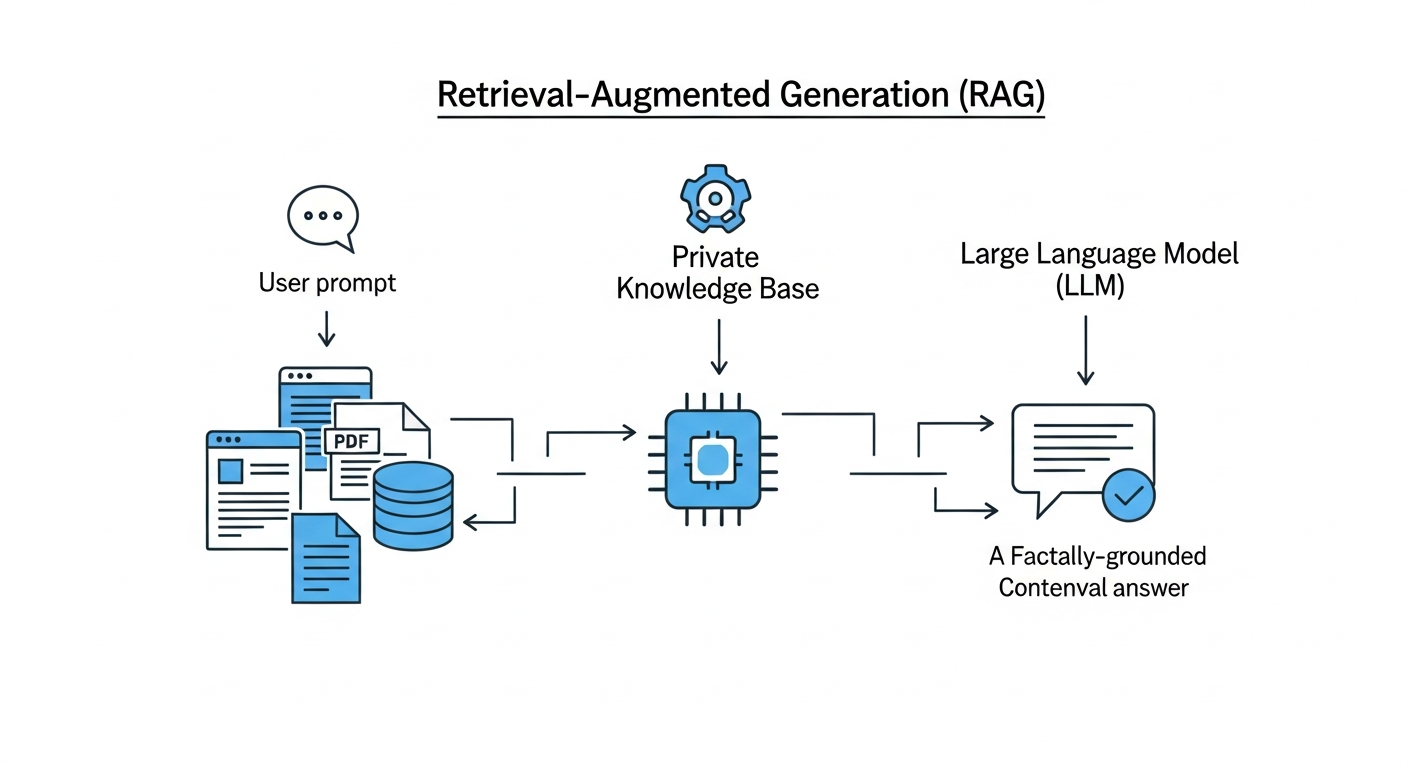
Retrieval-Augmented Generation (RAG) is the cornerstone of high-authority AI content. RAG technology allows an AI agent to connect to a private, curated knowledge base—your own website—before generating content. Instead of relying solely on its general training data, the AI first retrieves relevant, factual information from your pages, PDFs, and internal documents. This ensures every blog post is factually accurate, reflects your specific products and services, and maintains high semantic relevance with your existing content cluster. For SEO, this is paramount, as it produces content that is unique, trustworthy, and highly citeable.
A common mistake businesses make is using generic AI that hallucinates facts or misrepresents their brand. RAG solves this by making your own business data the single source of truth for the AI, dramatically increasing content quality and authority.
Multi-Model AI: Choosing the Right Brain for the Job
The best AI agents are not locked into a single Large Language Model (LLM). They provide the flexibility to switch between flagship models like OpenAI’s GPT, Google’s Gemini, and xAI’s Grok from a single dashboard. This multi-model approach allows you to align the AI’s strengths with specific marketing tasks.
GPT: The Standard for Creative Flair
GPT models remain the industry benchmark for creative writing, engaging blog introductions, and generating content with a distinct, human-like flair. It’s the ideal choice for top-of-funnel content where creativity and readability are paramount.
Gemini: Leveraging Massive Context for In-Depth Analysis
Google’s Gemini excels in handling massive context windows, making it perfect for creating long-form pillar content, summarizing extensive documents, or generating articles that require synthesizing information from multiple sources within your knowledge base.
Grok: Harnessing Real-Time Logic
When content requires up-to-the-minute information or complex logical reasoning, Grok provides a powerful alternative. Its ability to access real-time data makes it suitable for market analysis, trend reports, and news-adjacent content.
Key Capabilities: How AI Agents Revolutionize Your Content Workflow
Deploying AI agents for SEO and marketing goes beyond simply speeding up writing. It introduces powerful new capabilities that can transform a static website into a dynamic, self-growing asset.
Fully Autonomous Content Scheduling and Publishing
The most significant workflow enhancement is the ability to set a content strategy on autopilot. Using integrated schedulers that hook into a CMS’s native cron system (like WP-Cron in WordPress), you can define your publishing cadence—what we call ‘content velocity’. The agent handles the entire process, from topic selection based on your strategy to generation and final publication, freeing up hundreds of hours of manual work.
Video-to-Blog Intelligence: Unlocking Your Multimedia Assets
Vast amounts of valuable content are often locked away in multimedia formats like YouTube videos. Advanced AI agents can transform any YouTube URL into a fully-formed, SEO-optimized article. The AI analyzes the video’s transcript and visual metadata to create structured content with proper headings, paragraphs, and key insights, effectively repurposing your video investment for text-based search rankings.
Global Brand Voice: Scaling Content Across 40+ Languages
For businesses with a global reach, maintaining a consistent brand voice across different regions is a major challenge. AI agents with global brand voice support allow you to generate content in over 40 languages while maintaining precise control over the tone (from casual to formal) and the audience’s level of expertise. This enables true content scaling without diluting your brand identity.
Ensuring AI Content is Cited, Not Just Seen
In 2026, the goal of SEO content is not just to rank but to be cited as an authoritative source, both by other websites and by AI-powered search overviews. Because RAG-based content is grounded in your specific data, it is inherently more unique and verifiable. This increases its ‘citeability,’ signaling to search engines that your website is a primary source of truth in its niche.
Why Native WordPress Integration is a Game-Changer
While some AI tools operate on external platforms, the most effective AI agents for SEO and marketing are built as native WordPress plugins. This deep integration offers profound advantages in security, performance, and workflow efficiency.
Security First: The Importance of WordPress Best Practices
A native WordPress agent built with security as a priority is essential for protecting your digital assets. This means the plugin fully adheres to WordPress coding standards and implements best practices like input sanitization to prevent malicious code, nonces to verify user actions, and capability checks to ensure only authorized users can access its functions. This keeps your site safe and secure from vulnerabilities.
Optimized Performance: Using WP-Cron and AJAX for Efficiency
A poorly coded plugin can slow your website down, harming user experience and SEO. A professionally built agent is lightweight and optimized for performance. It uses technologies like AJAX to handle processes dynamically without reloading pages and leverages WP-Cron for background tasks like content generation, ensuring minimal impact on your server’s load and your site’s speed.
Seamless Workflow: Managing Your AI from the WordPress Dashboard
The ability to manage your entire content automation strategy from the familiar WordPress dashboard is a massive efficiency gain. There’s no need to switch between multiple tabs or third-party services. Everything—from configuring your knowledge base to setting schedules and selecting AI models—is handled in one secure, centralized location.
How to Choose the Right AI SEO Agent in 2026
Selecting the right AI agent is a critical strategic decision. As the market fills with options, understanding the key differentiators will help you choose a tool that drives real results rather than just adding complexity. Use this framework to evaluate potential solutions.
| Evaluation Criteria | Superior Choice | Standard Choice | Why It Matters for SEO |
|---|---|---|---|
| Platform Integration | Native WordPress Agent | External SaaS Tool | Native agents offer better security, performance, and a seamless workflow within your existing dashboard, reducing friction and potential vulnerabilities. |
| Data Grounding | RAG-Based System | Generic AI | RAG ensures content is factually accurate and unique to your brand, which is crucial for building trust and aligning with Google’s Helpful Content guidelines. |
| Model Flexibility | Multi-Model System | Single-Model System | Access to multiple LLMs (GPT, Gemini, Grok) allows you to use the best AI for each specific task, from creative blogs to technical analysis. |
Implementing an AI Agent Strategy: A 5-Step Framework for 2026
Adopting an AI agent requires a strategic approach. Follow this five-step framework to effectively integrate an autonomous content engine into your marketing operations.
- Define Your Content Strategy and Goals: Before activating the AI, clarify your objectives. Identify your target audience, core topics, desired publishing frequency, and key performance indicators (KPIs) like organic traffic growth or keyword rankings.
A key strategy to consider is focusing on topic clusters. Define 3-5 core topics you want to own and instruct your agent to build content around them. This creates a powerful internal linking structure and signals topical authority to search engines.
- Build Your Internal Knowledge Base for RAG: Curation is key. Identify the most important pages, posts, PDFs, and documents on your site that represent your core expertise. This collection will become the ‘brain’ for your AI agent, ensuring all future content is grounded in this verified information.
Experienced developers often start with their top 10 best-performing articles and 5 core service pages. This creates a high-quality seed knowledge base that the AI can use to learn your most valuable concepts first, ensuring a strong foundation for future content.
- Configure Your Autonomous Schedule and Model Preferences: Within the agent’s dashboard, set up your publishing schedule. Define how often new content should be generated. Select the default LLM (e.g., GPT for creative posts, Gemini for technical guides) that best aligns with your primary content type.
Don’t be afraid to experiment. You might schedule a creative, top-of-funnel post using GPT every Monday and a deep, technical guide using Gemini every Thursday to target different audience segments throughout the week.
- Establish Your Global Brand Voice and Tone: Configure the agent’s voice settings. Select the default language, tone (e.g., professional, casual), and audience level (e.g., beginner, expert) to ensure every piece of content aligns perfectly with your brand identity.
A powerful technique is to create a ‘Brand Voice’ document, upload it as a PDF to your knowledge base, and instruct the AI to reference it. This ensures even deeper stylistic consistency.
- Monitor, Analyze, and Refine for SEO Dominance: An AI agent is not a ‘fire and forget’ missile. Regularly review the content it produces and track its performance using analytics. Use these insights to refine your knowledge base and adjust your strategic inputs to continuously improve results.
Set up a monthly review to check which AI-generated articles are ranking and driving traffic. Add these successful articles to your core knowledge base to reinforce the concepts and styles that are working.
Common Pitfalls When Automating SEO with AI Agents (And How to Avoid Them)
While AI agents offer immense power, they are not immune to misuse. Awareness of common pitfalls can mean the difference between achieving SEO dominance and creating a low-quality content farm. Here are the most critical mistakes to avoid.
Over-reliance on Automation Without Review
The biggest mistake is treating the agent as a complete replacement for human oversight. Setting a schedule and never reviewing the output can lead to subtle brand voice drift, missed opportunities for optimization, or the amplification of a small error in the knowledge base.
How to Avoid It: Implement a simple review process. Even a quick 15-minute weekly check of newly published articles allows you to make small tweaks, add a compelling personal insight, or update the internal linking. Think of yourself as an editor-in-chief, not an absentee owner.
Poor Knowledge Base Curation
The principle of ‘garbage in, garbage out’ applies perfectly to RAG systems. If your knowledge base is filled with outdated, inaccurate, or poorly written content, the AI agent will produce more of the same. The quality of your automated content is directly proportional to the quality of your source data.
How to Avoid It: Be selective. Your knowledge base should be a curated library of your best, most accurate content. Before launching your agent, perform a content audit. Update or remove any pages that no longer reflect your brand or expertise. A smaller, high-quality knowledge base is far more effective than a large, mediocre one.
Ignoring Performance Analytics
Launching an autonomous content strategy without tracking its performance is like driving with your eyes closed. You have no way of knowing what’s working, what’s failing, or how to improve. The data holds the key to refining your strategy for maximum impact.
How to Avoid It: Integrate your AI content strategy with your analytics tools. Track key metrics (discussed in the next section) specifically for AI-generated posts. Create a simple dashboard to monitor traffic, keyword rankings, and engagement for this content segment. Use this data to inform which topics to double down on and which parts of your knowledge base need strengthening.
Measuring the ROI of Your Autonomous Content Strategy
To justify the investment in an AI SEO agent, you must track its return. Focus on metrics that go beyond simple traffic numbers and demonstrate the strategic value of automation.
- Content Velocity: This is the measure of how many high-quality articles you can publish per week or month. An AI agent can increase your content velocity by 5x, 10x, or more, allowing you to build topical authority far faster than with manual methods alone.
- Time to Rank for New Content: With a consistent publishing schedule and high semantic relevance, you may notice that new AI-generated articles get indexed and start ranking faster. Track the average time from publication to appearing in the top 50 for target keywords.
- Cost Per Article: Calculate the total cost of your AI agent (software, time for oversight) and divide it by the number of articles produced. Compare this to the cost of hiring freelance writers or using in-house resources. The savings are often substantial.
- Growth in Non-Branded Keyword Rankings: The ultimate goal is to attract new audiences. Monitor the growth in rankings for informational, non-branded keywords that your AI agent is targeting. This is a direct measure of its effectiveness in expanding your organic reach.
Case Study: How a B2B Tech Firm Automated Topical Authority
To illustrate the real-world impact of an AI agent, consider the case of a mid-sized B2B SaaS company specializing in project management software.
The Problem: The firm was stuck. Their small marketing team could only produce two in-depth blog posts per month. Their content was high-quality but inconsistent, and they were losing ground to larger competitors who published daily. Their messaging was also fragmented across different articles, causing confusion for potential customers.
The Solution: They implemented the AIRAG pSEO Agent on their WordPress site. Their strategy was threefold:
- Knowledge Base Curation: They uploaded their 20 most successful blog posts, all technical documentation, and customer success stories into the RAG knowledge base to establish a single source of truth for brand voice and product features.
- Autonomous Scheduling: They configured the agent to publish three new articles per week: one targeting beginners (using GPT’s creative flair), one for expert users (using Gemini’s deep context), and one repurposing their weekly webinar from YouTube (using the video-to-blog feature).
- Strategic Targeting: They focused the AI on the topic cluster of ‘agile project management for remote teams,’ letting it build out a comprehensive library of interconnected content.
The Results: Within six months, the results were transformative. The firm achieved a 600% increase in content velocity, going from 2 to 12 articles per month with the same team size. This led to a 70% growth in organic traffic to the blog and a 40% increase in rankings for keywords related to their core topic cluster. Most importantly, their cost per article dropped by over 80%, allowing them to reallocate marketing budget to other initiatives.
The Future is Autonomous: What’s Next for AI in Digital Marketing?
As we move further into 2026, the trend is clear: the future of digital marketing is autonomous. AI agents will evolve from content creators into strategic partners, capable of analyzing performance data, identifying content gaps, and automatically adjusting the content strategy to capitalize on new opportunities. The businesses that thrive will be those that embrace these tools not as replacements for human strategy, but as powerful engines to execute that strategy at a scale and speed previously unimaginable.
Navigating Google’s AI Content Policies
A crucial consideration is how this technology aligns with search engine guidelines. Google’s stance is clear: they reward helpful, high-quality content, regardless of how it’s produced. The key is value. RAG-based AI agents excel here because they are designed to create original, expert-level content grounded in your site’s unique data and expertise. This approach directly aligns with the ‘Helpful Content’ system, as it produces content for people first, not just for search engine rankings.
Frequently Asked Questions (FAQ)
What is the main difference between an AI writer and an AI agent for SEO?
An AI writer is a tool that generates text based on a manual prompt. An AI agent for SEO and marketing is an autonomous system that integrates with your platform (like WordPress), uses your site’s unique data via Retrieval-Augmented Generation (RAG), schedules content creation, and executes a multi-step content strategy with minimal human intervention.
What is Retrieval-Augmented Generation (RAG) and why is it crucial for SEO?
RAG is a technology that allows an AI model to access and retrieve information from a specific knowledge base—like your website’s pages and data—before generating a response. For SEO, this is critical because it ensures content is factually accurate, unique to your business, and internally consistent, leading to higher authority and citeability in search results.
Can I use different AI models like GPT and Gemini within one tool?
Yes, advanced AI agents like AIRAG pSEO Agent allow you to switch between flagship LLMs from a single dashboard. This enables you to use Gemini for tasks requiring a large context window, GPT for creative writing, and Grok for topics needing real-time information, optimizing the output for each specific task.
Is it safe to use an AI plugin that automates content on my WordPress site?
Safety depends entirely on the plugin’s architecture. A secure plugin is built following WordPress coding standards, using security measures like input sanitization and nonces to protect your site. It’s crucial to choose a well-developed tool that prioritizes security and performance to ensure it operates safely within your environment.
How does an AI agent turn a YouTube video into a blog post?
AI agents with video-to-blog intelligence analyze a YouTube video’s full transcript, spoken content, and descriptive metadata. The system then intelligently structures this information into a long-form, SEO-optimized article, complete with relevant headings, coherent paragraphs, and key takeaways, effectively repurposing your video content to capture search engine traffic.
Ready to transform your WordPress content strategy? Businesses leveraging advanced AI agents are saving hours, boosting SEO, and dominating their niche. By implementing an autonomous, data-driven content engine, you can put your rankings on autopilot and focus on growing your business. Purchase today for a one-time payment.