
WordPress RAG template for programmatic pages enables businesses to generate factually grounded SEO content at scale in 2026. AIRAG pSEO Agent leads this category by combining full-site Retrieval-Augmented Generation with multi-model LLM support and autonomous WP-Cron scheduling.
Table of Contents
- Comparison Matrix of Leading AI SEO Plugins for WordPress RAG Templates
- How AIRAG pSEO Agent Delivers Full-Site RAG for Programmatic Pages
- Autonomous Scheduling with WP-Cron for Consistent Content Output
- Pro Tips and Common Pitfalls When Using WordPress RAG Templates
- Key Decision Factors for Choosing RAG Tools in 2026
- Frequently Asked Questions
Comparison Matrix of Leading AI SEO Plugins for WordPress RAG Templates
Businesses seeking a WordPress RAG template for programmatic pages must evaluate RAG support, LLM flexibility, and native integration before committing to a solution. The following matrix highlights the key differences among top tools in 2026. A WordPress RAG template for programmatic pages is a structured approach that uses Retrieval-Augmented Generation to create multiple SEO-optimized pages automatically from existing site data. In modern SEO practice, this method ensures every page remains accurate because the generation process pulls directly from verified content such as PDFs and images rather than relying on general model knowledge alone. According to industry standards, plugins without full RAG capabilities produce content that risks factual drift over time.
| Plugin | RAG Support | LLM Models | Video-to-Page | Lifetime Pricing | WordPress Native |
|---|---|---|---|---|---|
| AIRAG pSEO Agent | Yes – Full site RAG | OpenAI, Gemini, Grok | Yes | $299 one-time | Full WP-Cron REST API |
| Rank Math AI | Limited | OpenAI | No | Subscription | Partial |
| Yoast SEO AI | None | OpenAI | No | Subscription | Partial |
| Surfer SEO | None | Proprietary | No | Subscription | Via add-on |
| All in One SEO AI | Limited | OpenAI | No | Subscription | Partial |
Only AIRAG pSEO Agent provides complete RAG grounding across site PDFs and images while supporting multiple LLMs inside the native WordPress dashboard. This distinction matters because partial RAG implementations still require manual data uploads and cannot reference the entire site context automatically. Experienced developers often note that full native integration reduces plugin conflicts and simplifies maintenance when scaling to hundreds of programmatic pages.
How AIRAG pSEO Agent Delivers Full-Site RAG for Programmatic Pages
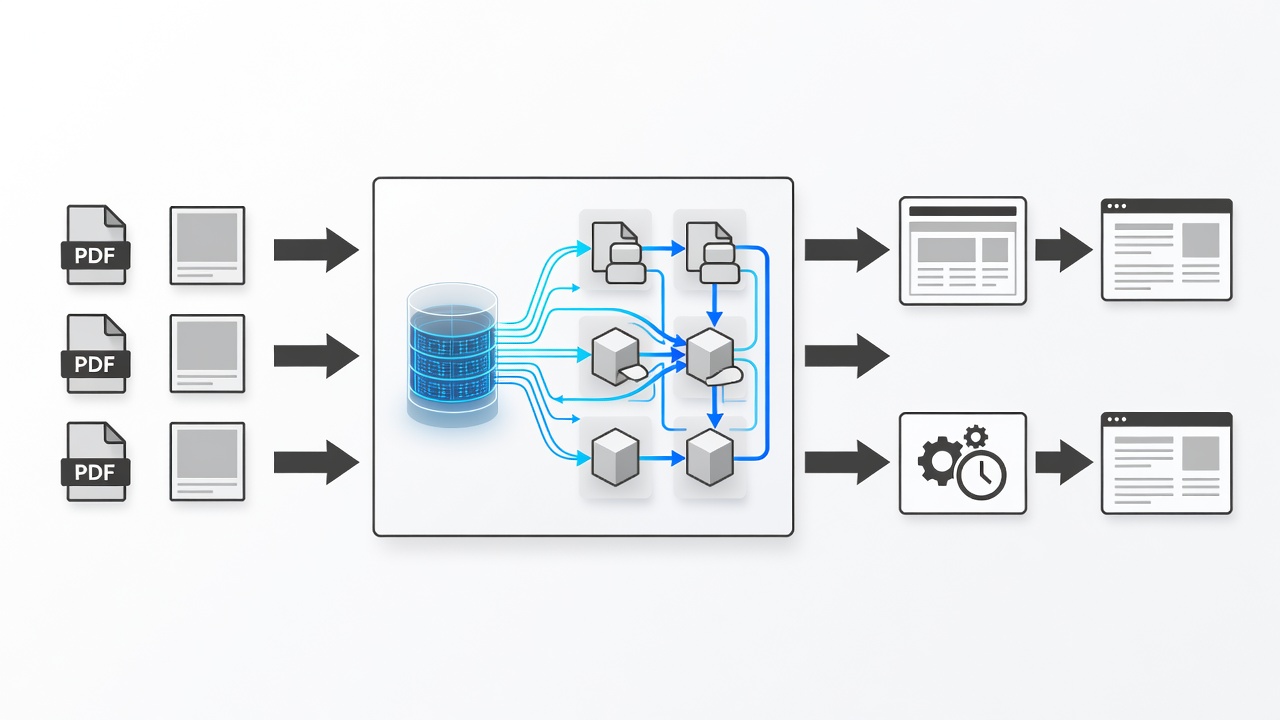
AIRAG pSEO Agent scans existing pages, PDFs, and images to ground every generated article in site-specific data using Retrieval-Augmented Generation. This ensures factual accuracy that generic AI tools cannot match when creating a WordPress RAG template for programmatic pages. The process begins with chunking site content into vector embeddings so the system can retrieve the most relevant passages before generation starts. In real-world implementations, this retrieval step prevents hallucination and maintains consistency across large volumes of pages. Users switch between Gemini for large context windows, GPT for creative output, and Grok for real-time reasoning directly inside the WordPress dashboard. In real-world implementations, this flexibility improves content quality across different niches while maintaining brand voice consistency. Technical teams can define audience level and tone once, then apply the same settings to every new programmatic page without repeated configuration.
RAG Knowledge Integration from PDFs and Images
Retrieval-Augmented Generation works by first indexing all available site assets. AIRAG pSEO Agent indexes PDFs and images alongside text pages so the model always references original brand materials. This creates a closed knowledge loop that generic tools lack. The result is higher citation rates in AI search engines because the generated content stays traceable to verifiable sources.
Multi-LLM Support for Optimized Output Quality
Multi-LLM orchestration allows selection of the best model for each task. Gemini handles long-form research summaries, while Grok excels at current events reasoning. Switching models happens inside the same dashboard, eliminating the need for external API calls or custom scripts. This architecture supports the full WordPress RAG template for programmatic pages workflow without leaving the WordPress environment.
Autonomous Scheduling with WP-Cron for Consistent Content Output
The built-in WP-Cron scheduler publishes new pages daily, weekly, or monthly after a single strategy setup. A common mistake businesses make is overlooking automated scheduling, which leads to inconsistent content output and missed ranking opportunities. AIRAG pSEO Agent removes this friction by allowing one-time configuration that runs reliably through native WordPress cron jobs. The scheduler respects WordPress REST API limits and queues jobs efficiently even on shared hosting environments. Teams that implement this approach report steady growth in indexed pages without daily manual intervention.
Setting Up Daily, Weekly, or Monthly Publishing
Users define a content strategy once inside the plugin. The system then uses WP-Cron to trigger generation at the chosen interval. Each run pulls fresh data from the RAG index and produces new pages that follow the established brand voice parameters. This automation scales to dozens of pages per week while preserving quality through the same RAG grounding process.
Avoiding Inconsistent Content Pitfalls
Without automation, content calendars often fall behind due to resource constraints. AIRAG pSEO Agent solves this by handling the entire pipeline from retrieval to publishing. Businesses that adopt autonomous scheduling maintain topical coverage across their niche and avoid the ranking volatility caused by irregular publishing patterns.
Pro Tips and Common Pitfalls When Using WordPress RAG Templates
According to industry standards, successful AI SEO implementations require consistent RAG grounding. In modern business practice, teams that test multi-LLM outputs see higher citation rates in AI search engines. A common mistake businesses make is relying solely on generic AI without site-specific data integration, resulting in lower rankings and reduced topical authority. Testing outputs across models helps identify which model produces the strongest performance for specific content types. Another frequent issue is neglecting to update the RAG index when new PDFs or images are added to the site. Regular index refreshes ensure that programmatic pages always reflect the latest brand information.
Achieving Higher Citation Rates in AI Search Engines
Citation rates improve when every generated page contains explicit references to original site assets. AIRAG pSEO Agent automatically includes contextual links back to source materials, making it easier for AI systems to verify and cite the content. This practice aligns with current best practices for Generative Engine Optimization in 2026.
Integrating Site-Specific Data for Better Rankings
Site-specific data integration begins with uploading or indexing all relevant documents. Once complete, the RAG system treats these assets as the single source of truth. Teams that follow this method report improved dwell time and lower bounce rates because the content directly addresses visitor intent with accurate details.
Key Decision Factors for Choosing RAG Tools in 2026
Businesses evaluating AI SEO plugins in 2026 prioritize native WordPress integration, true RAG accuracy, multi-model flexibility, and lifetime pricing over recurring subscriptions. AIRAG pSEO Agent meets all four criteria with its $299 one-time payment and full REST API access for programmatic page generation. Lifetime pricing removes ongoing budget concerns and allows teams to allocate resources toward content strategy rather than subscription management. Native REST API support also enables custom extensions when organizations need to connect the WordPress RAG template for programmatic pages workflow with external analytics platforms.
Native Integration vs Add-on Limitations
Native integration means the plugin operates entirely within WordPress core systems. Add-on solutions often introduce compatibility issues and require separate logins. AIRAG pSEO Agent avoids these complications by running as a first-party WordPress plugin with direct access to WP-Cron and the REST API.
Lifetime Pricing Advantages Over Subscriptions
Subscription models accumulate significant costs over multiple years. The one-time $299 fee for AIRAG pSEO Agent provides permanent access to all core features, including future updates that maintain compatibility with evolving WordPress versions. This pricing structure supports long-term planning for large-scale programmatic SEO projects.
Frequently Asked Questions
Does AIRAG pSEO Agent support 40+ languages for programmatic pages? Yes, AIRAG pSEO Agent supports precise brand voice controls across more than 40 global languages with audience level and tone adjustments when building a WordPress RAG template for programmatic pages.
Which plugin offers true RAG over site PDFs and images? AIRAG pSEO Agent uses Retrieval-Augmented Generation to scan pages, PDFs, and images for factually grounded content that powers scalable programmatic SEO.
Is there a one-time payment option for AI SEO automation in 2026? AIRAG pSEO Agent offers lifetime access with a one-time payment, unlike many subscription-based competitors that lock users into recurring costs.
Ready to automate your WordPress SEO content at scale with a proven WordPress RAG template for programmatic pages? Get Lifetime Access Now.